
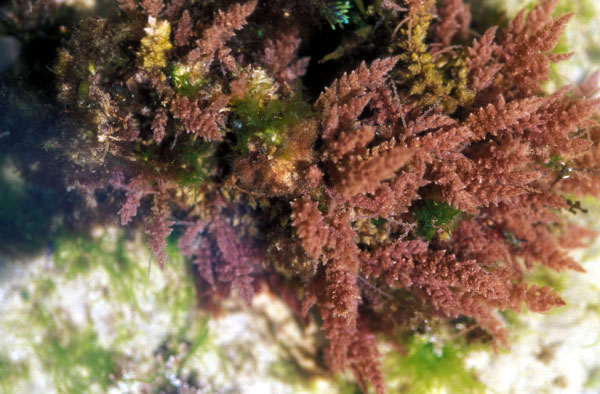
Analysis of Keystone Enzyme in Agar Hydrolysis Provides Insight into the Degradation of a Polysaccharide from Red Seaweeds

Error message

  • Warning: ini_set(): Headers already sent. You cannot change the session module's ini settings at this time in drupal_environment_initialize() (line 695 of /home4/tassusac/public_html/marineagronomy/includes/bootstrap.inc).
  • Warning: ini_set(): Headers already sent. You cannot change the session module's ini settings at this time in drupal_environment_initialize() (line 696 of /home4/tassusac/public_html/marineagronomy/includes/bootstrap.inc).
  • Warning: ini_set(): Headers already sent. You cannot change the session module's ini settings at this time in drupal_environment_initialize() (line 697 of /home4/tassusac/public_html/marineagronomy/includes/bootstrap.inc).
  • Warning: ini_set(): Headers already sent. You cannot change the session module's ini settings at this time in drupal_environment_initialize() (line 700 of /home4/tassusac/public_html/marineagronomy/includes/bootstrap.inc).
  • Warning: ini_set(): Headers already sent. You cannot change the session module's ini settings at this time in drupal_environment_initialize() (line 702 of /home4/tassusac/public_html/marineagronomy/includes/bootstrap.inc).
Abstract: 

Background: The catalytic mechanism and substrate recognition required for cleavage of the -linkage in agarose are unclear.
Results: Structural analysis of a family 117 glycoside hydrolase details substrate recognition and supports an inverting mechanism. 

Conclusion: GH117 enzymes use substrate distortion and an unusual general acid for catalysis.
Significance: Microbes may utilize alternate strategies to catalyze the degradation of polysaccharides with unique structural characteristics

Author(s): 
Jan-Hendrik Hehemann
Leo Smyth
Anuj Yadav
David J. Vocadlo
Alisdair B. Boraston
Article Source: 
JOURNAL OF BIOLOGICAL CHEMISTRY Vol. 287, Number 17
Category: 
Basic Biology
Seaweed composition
Uses of Seaweeds: Miscellaneous